Article published in the Jordanian newspaper Al-Dustour
What is happening today in The West Bank and Jerusalem may appear to be an escalating continuation of the well-known policies of Benjamin Netanyahu’s government: expanding settlement, undermining the Palestinian presence, changing the reality in Jerusalem, and using legislative, administrative, security, and political tools to impose new facts on the ground. But stopping at this description may obscure from us a more dangerous transformation; what we are witnessing in recent days is approaching, in my estimation, a tipping point, with which Israeli policies are moving from one level to another.
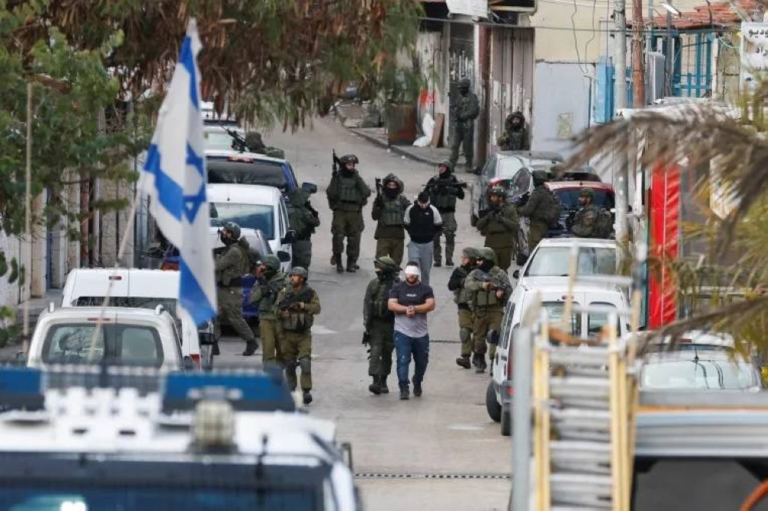
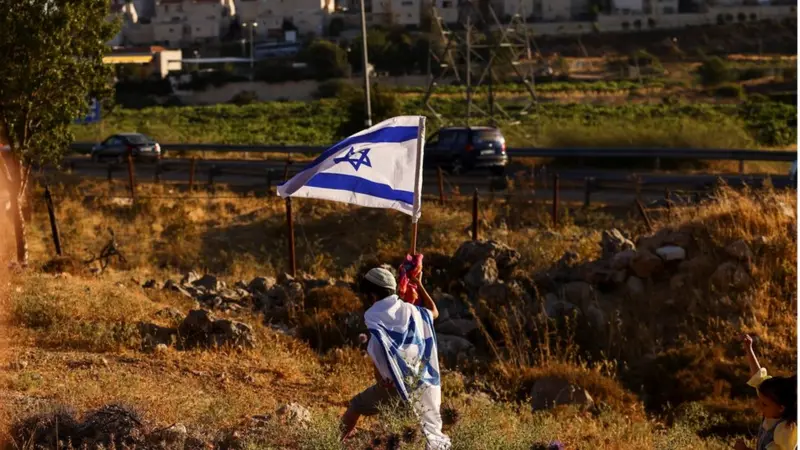
The terrifying rise in settler violence and terrorism in Palestinian villages, and the spread of phenomena such as the “Hilltop Youth,” in parallel with increasing restrictions on institutions and schools in Jerusalem, and the E1 project, with what it means in terms of the geographic fragmentation of the West Bank and the effective undermining of the possibility of establishing a viable Palestinian state; all of this aims not only to make Palestinian life more difficult, but to create an environment in which human insecurity becomes the daily norm, and the Palestinian feels threatened in his home, land, road, school, and source of livelihood.
In this sense, we are facing a qualitative shift, even if it appears to be a quantitative extension of what preceded it; the role of extremist settler groups is drawing ever closer to the logic of Zionist gangs, such as the Haganah and Stern, in the period before the establishment of Israel: exerting pressure, violence, and intimidation to create a new demographic and geographic reality.
The question for Jordan is not only moral or political, but is directly linked to Jordanian national security and strategic interests. The threats are multiple and intertwined; from the rise of extremist Zionist discourse, which is no longer marginal in Israel, to the specter of forced or “voluntary” displacement, passing through the hundreds of thousands who hold Jordanian passports and live in the West Bank, and reaching Jerusalem and attempts to change the status quo, in addition to the social, political, cultural, geographic, and historical interconnection between Jordan and The West Bank. Nor does it seem realistic to wager that the next Israeli elections, even if Netanyahu leaves office, will simply return Israel to the previous path of settlement; the transformations that have occurred in Israeli society and politics are deeper than the person of Netanyahu and his government.
It is precisely here that the Jordanian dilemma emerges; for decades, the Jordanian strategy has been based on considering a political settlement and the establishment of a Palestinian state to be a Jordanian national and strategic interest. Today, this project is almost evaporating, while the Palestinian Authority itself is threatened with further reduction and undermining, and perhaps later with collapse. What does Jordan do if the assumptions on which its previous policy was based collapse?
Two trends can be observed in the Jordanian debate. The first calls, in one way or another, for “turning east instead of west,” and withdrawing from the Palestinian file, on the basis that what is happening lies beyond the borders, and that what is required of Jordan is to protect the borders and reject displacement. But the problem with this conception is that it ignores the reality of geography, history, demography, and security; The West Bank is not an ordinary external file for Jordan.
As for the second trend, it recognizes the danger of the current transformations and their direct and potential impact on Jordanian national security, but it places its weight mainly on diplomatic and political escalation against Israeli practices, which is required and necessary, but is no longer sufficient.
What we need today is to develop a third trend: a Jordanian national approach that proceeds from the premise that The West Bank and Jerusalem represent a vital sphere for Jordanian national security, and that what is required is a transition from managing reactions to building an integrated strategic action plan.
Politics and Society Institute has previously presented papers and ideas in this direction. If Israel has moved in recent years from discussing a “solution to the conflict” to managing it, and then to attempting to decide essential aspects of it on the ground, it is necessary for Jordanian policy, in turn, to develop its tools for dealing with the new reality.
Let us take, for example, the slogan “strengthening Palestinian steadfastness,” which is often repeated in our political discourse. What precisely is meant by steadfastness? And what are the policies, tools, and resources that transform it from a political slogan into a strategy that can be measured and implemented?
The King Hussein Bridge, for example, is not merely a border crossing, but represents a vital lung for Palestinians in the West Bank in the face of policies that push toward turning it into a large prison; therefore, facilitating movement through it and developing its infrastructure and procedures should be viewed from a strategic perspective. The same applies to Jerusalem and the holy sites, where there is an urgent need to build a more integrated and effective Jordanian-Arab approach to confronting the escalating Israeli project there.
The conclusion is that The West Bank, for Jordan, is not an external file that can be placed in second rank; it is national security, strategic interests, a regional role, an internal equation, and a deeply intertwined historical relationship. If the current transformations are moving the conflict into a new phase, then the question is no longer only: how does Jordan reject what is happening? Rather: what is the Jordanian plan for dealing with the day after the erosion of the Palestinian state project?
That, in my estimation, is one of the most pressing questions facing the Jordanian state and Jordanian political and intellectual elites today.