The Policy and Society Institute has issued a new policy paper titled “Jordan and Gradual Annexation in the West Bank: Threat Assessment and Response Options,” based on the conclusions of a specialized discussion session held by the Institute. This session addressed the gradual annexation trajectory of the West Bank and its potential repercussions on Jordan, Palestine, and the region, with the participation of a number of experts and researchers concerned with Palestinian and Israeli affairs and regional security issues. The paper also relies on a research and analytical review of the current political and field context, allowing for a transition from describing current developments to assessing their implications on Jordanian interests and presenting policy options open for discussion before decision-makers.
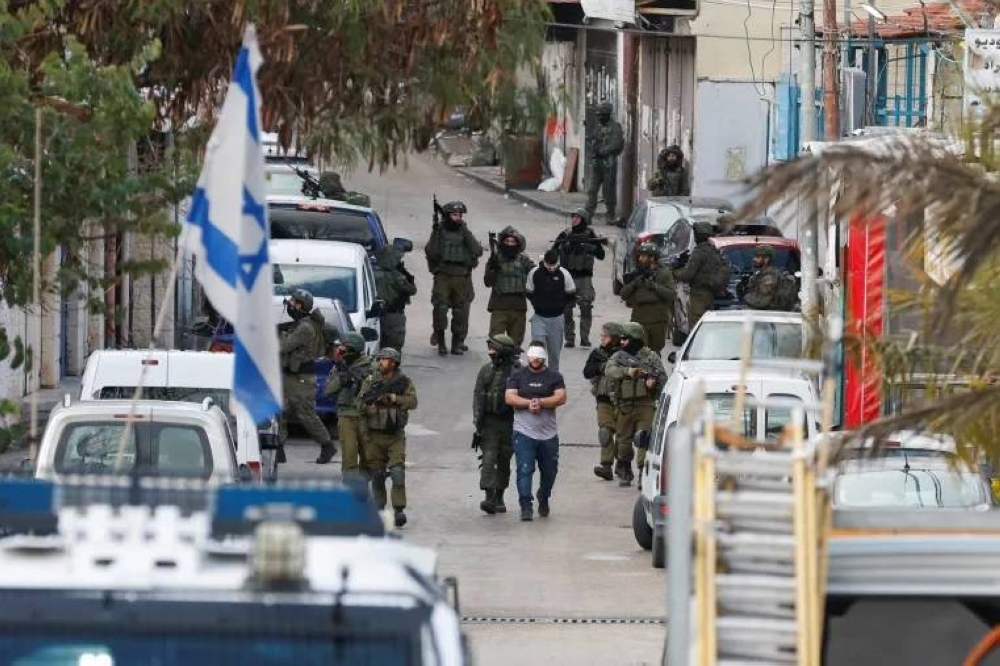
According to the paper, the most urgent threat to Jordan lies in the entrenchment of a path of actual gradual annexation that reshapes the political, security, and demographic reality west of the Jordan River. This path is manifested in settlement expansion, enhanced security control, movement restrictions, land and resource confiscation, and financial and economic pressure on the Palestinian Authority, transforming annexation from a declared legal decision into an accumulated daily reality.
The seriousness of this path lies in its accumulation of a set of intertwined risks directly affecting Jordanian interests, including the possibility of exhausting or collapsing the Palestinian Authority, increased security pressure on the borders, heightened possibilities of displacement or forced population movements, escalation of internal polarization, in addition to the erosion of the political environment that governed the Jordanian-Israeli relationship since the signing of the peace treaty.
Conversely, current Israeli developments indicate a gradual shift from managing the conflict towards an attempt to resolve it militarily, by intensifying settlement, expanding settlers’ influence, weakening the institutional and economic capacity of the Palestinian Authority, and imposing geographic and security facts that make any future political settlement more difficult. This path also intersects with the rise of right-wing and religious rhetoric inside Israel, alongside an American environment that is supportive or tolerant of Israeli policies, limiting opportunities for effective international pressure in the near term.
Jordanian dealings with the gradual annexation should shift from a reactive mindset to a proactive one, through a multi-level approach combining political and legal deterrence, internal resilience, regional and international coordination, security and humanitarian preparedness, and supporting the steadfastness of Palestinians within the West Bank. The paper recommends adopting a gradual Jordanian approach that treats the actual annexation as an existing threat requiring continuous tools for monitoring, assessment, and action.