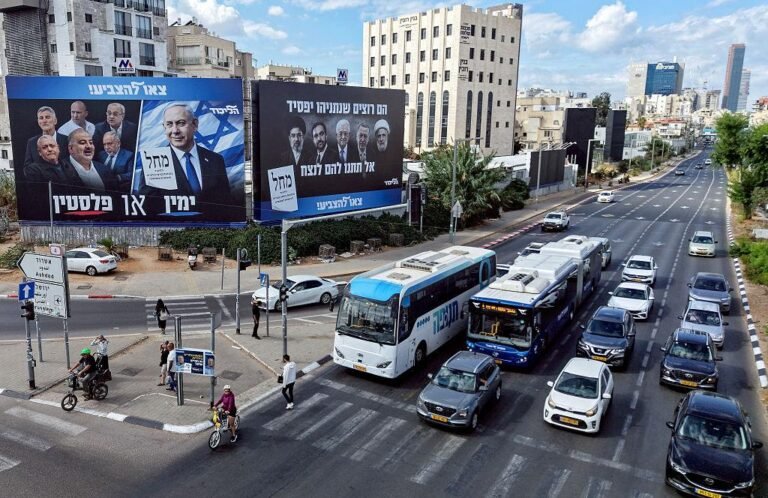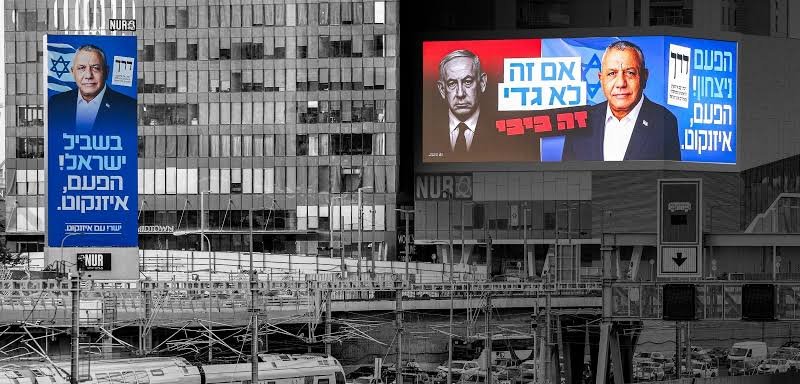
This paper is based on the outputs of the discussion session held by the Politics and Society Institute under the title “The 2026 Israeli Elections: Beyond the Question of Who Governs,” alongside research into the transformations of the Israeli political and social landscape and the positions and orientations of the competing forces, in order to assess the limits of the change that the elections may produce and its implications for the Palestinian question and Jordanian national interests.
The Israeli elections raise a question that goes beyond the identity of the next prime minister to the limits of the change they may produce in Israeli policies toward the Palestinians and the region. Competition over forming the government does not necessarily mean competition between divergent projects for settling the conflict, just as agreement on some objectives does not negate differences in the tools for implementing them, their pace, and the acceptable cost of achieving them. Hence, reading the elections requires distinguishing between a change of leadership, a change in the composition of the coalition, and a shift in the state’s political orientations.
The issue gains importance in light of transformations within Israeli society, the struggle over the identity of the state and the relationship between its institutions, and the questions added by the events of October 7 and the war regarding security and political responsibility. Holding the leadership accountable for its failures overlaps with voters’ perceptions of the sources of threat and ways of dealing with them, making the translation of opposition to the government into support for a political alternative an issue that requires examination, especially when it concerns the future of The West Bank and the Gaza Strip and the possibility of establishing a Palestinian state.
For Jordan, the significance of the elections is linked to the policies they may produce that affect the future of the Palestinian question and Jordanian national interests, foremost among them settlement, annexation, Jerusalem, the Hashemite custodianship, the possibilities of displacement, and border security. Accordingly, this paper examines the extent of the elections’ ability to bring about change in Israeli policies, and the limits of this change in light of the positions of the competing forces and internal transformations, leading to an assessment of possible scenarios and their implications for the Palestinians and Jordan.
First: The Political and Security Context of the Elections
The Israeli elections are taking place amid the continuing political and security impact of October 7, making them a test of the competing forces’ ability to provide answers regarding the failure and to restore the sense of security. However, the centrality of the event does not mean that voters agree on its interpretation or on the leadership most capable of dealing with its consequences; voting against Netanyahu may be based on holding him responsible for the failure, while voting for him may be based on support for his military response or confidence in his ability to confront threats.
The weight of October 7 appears in a survey published by the Israel Democracy Institute in September 2026, in which 68% of Jewish respondents considered its events a central factor in determining the party for which they would vote, compared with 32% of Arab respondents. At the same time, the ranking of voters’ priorities reveals multiple motives for voting; the party’s position on foreign policy and security was among the two most important factors for 39% of Jewish respondents, with a limited margin over the economy and the cost of living at 38%. Among Arab respondents, crime in Arab society and economic conditions topped electoral considerations. These differences mean that the impact of the war passes through divergent social and political priorities and does not produce a unified electoral direction.
Similarly, the demand for accountability overlaps with differing assessments of the outcomes of the war. In the Israeli Society Index issued by the Jewish People Policy Institute in October 2026, 76% of those who define themselves as right-wing gave their sense of victory one of the two highest scores on a five-point scale, compared with 16% in the center and 3% on the left. In the same survey, 58% of Israelis supported the establishment of an official commission of inquiry into the events of October 7 by the Supreme Court. These results reveal the presence of the demand for accountability alongside a sharp division over the outcome of the war; therefore, neither satisfaction with military performance nor the demand for an investigation should be treated, on its own, as a sufficient indicator of voting direction 1.
In this context, Netanyahu seeks to distance responsibility for the failure from himself by focusing on the assessments of the army and intelligence agencies, which considered Hamas deterred, and by emphasizing, according to his narrative, that he did not receive prior warning and that he was informed of the start of the attack at 6:29 a.m. A Likud statement that he reposted on his account on October 7, 2026, reintroduced this narrative, placing responsibility on security officials for failing to alert him to the indicators that appeared during the night 2. This discourse can be read as an attempt to confine accountability to intelligence and military failure and the timing of information transmission, and to distance it from the responsibility of the political leadership and the policies that preceded the attack. Electorally, this allows him to present himself as the leader of the military response, while placing responsibility for the failure to prevent the attack on the security establishment; thus making the distribution of responsibility part of the competition for power.
Accordingly, electoral competition can be understood as a struggle over interpreting what happened and defining the conditions of future security. The ruling forces seek to turn the outcome of the confrontations into political capital, while the opposition can employ the failure and the demand for accountability to justify a change of leadership. But the movement of votes between these two directions does not, in itself, prove a shift in the position toward Palestinian rights or the settlement of the conflict; this requires an independent examination of the programs of the competing forces and their political commitments.
Thus, the significance of the elections depends on the substance of the change offered by the alternative, in addition to its ability to win. Security accountability may open the way for changing the government, while demand for policies of force and control continues; and it may produce a difference in the management of these policies, their relationship with institutions, and their international cost. This is what makes distinguishing between opposition to the leadership and opposition to its orientations toward the Palestinians a necessary entry point for assessing the results of the elections and their implications.
Second: The Nature of Competition and the Limits of Difference Among Political Forces
The divide between Netanyahu’s supporters and opponents does not correspond to the divide over the future of the occupation and a political settlement. Opposition to the continuation of the prime minister may be based on his responsibility for the security failure, his management of the war, or his relationship with the judiciary and his coalition partners, without necessarily including acceptance of independent Palestinian sovereignty. Therefore, assessing the prospects for change requires examining the substance of the alternatives on offer and distinguishing between disagreement over the objectives of Israeli policy and disagreement over its management.
The position on a Palestinian state reveals the broad overlap among forces competing for power. In July 2024, The Knesset approved a declaration opposing the establishment of a Palestinian state west of the Jordan River. Rejection of its establishment also remains an explicit part of Netanyahu’s declared position 3, including The West Bank and the Gaza Strip. This does not prove that all Israeli parties are identical, but it shows that rejection of a Palestinian state has a political and institutional presence that goes beyond the position of the religious right alone.4
Gadi Eisenkot’s positions stand out as an example of the limits of linking a change of leadership to a change in political orientation. His rejection of the two-state solution in the post-October 7 circumstances is accompanied by his objection to transferring powers for administering The West Bank to Smotrich, and his criticism of settler violence and the damage it causes to Israel’s international standing and the settlement project. Likewise, his objection to advancing construction in the E1 area focused on timing and international cost. The combination of these positions indicates that the proposed alternative gives priority to restoring military and institutional administration and controlling the cost, without offering, in these positions, a commitment to establishing a Palestinian state.5
On this basis, part of the competition may revolve around how to entrench Israeli control and the conditions for its continuation. There is a difference between advancing settlement facts at an accelerated pace and subjecting them to more cautious security and diplomatic calculations. This difference may have a direct impact on the scale of land confiscation, the protection of Palestinians from settler violence, and the possibility of preserving their geographic contiguity. But it does not automatically turn into a difference over the Palestinians’ right to sovereignty; that remains linked to clear political commitments that go beyond objection to a specific measure or project.
Third: Internal Transformations and Their Impact on the Options of the Next Government
The ability of the next government to change policies depends on the nature of the alliance that will bring it to power and on the position of religious and nationalist forces within state institutions. These forces can influence through the conditions of participation in the coalition, control of ministerial portfolios, and intervention in legislation and the distribution of resources. Therefore, changing the prime minister may not be sufficient to change the direction of decision-making if the formation of the majority remains dependent on forces that adhere to the same policies, or if they are able to impose their priorities in exchange for ensuring the coalition’s continuation.
The struggle over the judiciary stands out as a dispute over the limits of the authority of the parliamentary majority and its ability to reshape state institutions. Influence over the appointment of judges and the powers of judicial review determines the space available for the government to implement its program and the constraints its decisions may face. The plan for judicial changes sought to expand the coalition’s influence in selecting judges, affecting the balance between powers. Thus, the election result will affect the competing forces’ ability to continue or limit this path, and the institutional rules through which subsequent disputes will be managed.
This intersects with the growing demographic weight of the Haredim, who constituted 14.3% of the population in 2025, according to the statistical report of the Israel Democracy Institute. This growth gives issues of religious education, allocations, participation in the labor market, and military service increasing importance in political negotiation. But it does not mean an automatic transformation into a single bloc; the Haredim and Religious Zionism differ in their relationship to the state and military service, even when they meet in a governing alliance. Therefore, assessing the influence of religious forces requires distinguishing between their interests and positions, rather than grouping them into a homogeneous direction.
The conscription of the Haredim constitutes a direct test of the next government’s ability to reconcile the army’s requirements with its coalition commitments. In October 2026, data from the Israeli Society Index showed that about two-thirds of Israelis opposed reinstating the exemption of Haredi yeshiva students from military service. This places any coalition that depends on the Haredi parties before a potential contradiction between protecting exemption arrangements and responding to the demand to distribute the burdens of service 6. This file may become a source of legislative obstruction or a threat to the stability of the government, even with agreement among its parties on other security and political issues.
As for the relationship with the security establishment, it is connected to determining responsibility for October 7 and to the limits of the influence of professional assessment on political decision-making. If the dispute over the failure continues to be used to undermine confidence in security leaders, appointments and investigations may become part of the struggle over state institutions. Conversely, restoring the relationship between the government and the security establishment does not mean adopting a political settlement with the Palestinians; it may revolve around improving the management of force and arranging priorities. Accordingly, these transformations are likely to affect the cohesion of the government, the pace of its decisions, and the tools for their implementation, while the direction of its policy toward the Palestinians remains linked to the substance of its program and its coalition agreement7.
Fourth: The Electoral Map and the Balances of Government Formation
The final polls published on October 23, 2026, and available up to the preparation of this version on October 25, show an advance for the “Yashar” party led by Eisenkot, without a ready majority for his camp. Competition is distributed between Netanyahu’s camp, four Jewish opposition lists, and two Arab lists, alongside small lists whose crossing of the electoral threshold may change the calculations of both sides. The table presents a comparison of the polls of Channels 12 and 13 and “Kan,” while keeping each poll independent rather than constructing a single result from figures from different bodies.
| Party or list | Channel 12 | Channel 13 | Kan |
|---|---|---|---|
| Yashar – Eisenkot | 23 | 22 | 22 |
| Likud – Netanyahu | 21 | 19 | 20 |
| Beyachad “Together” – Bennett and Lapid | 15 | 14 | 14 |
| The Democrats – Yair Golan | 10 | 10 | 8 |
| Yisrael Beiteinu – Lieberman | 8 | 8 | 8 |
| Otzma Yehudit – Ben-Gvir | 8 | 8 | 8 |
| Shas | 8 | 7 | 7 |
| United Torah Judaism | 7 | 8 | 8 |
| Religious Zionism–Zehut | 6 | 8 | 7 |
| The Joint List | 9 | 9 | 9 |
| The United Arab List “Ra’am” | 5 | 7 | 5 |
| The Reserve–Economic, Hendel and Zelekha | Below the threshold | Below the threshold | 4 |
| Total | 120 | 120 | 120 |
This comparison gives Netanyahu’s camp 50 seats in the three polls, compared with 56, 54, and 52 for the Jewish opposition, respectively. The two Arab lists receive 14–16 seats, and the Hendel-Zelekha list appears separate from the two camps in the “Kan” poll. Therefore, it is not permissible to add together all the seats opposed to Netanyahu as though they were a coalition agreed on governing; the gap between the arithmetic majority and political agreement is the core of the dilemma.
At the level of positions, Netanyahu’s camp includes a national and religious right that pushes toward expanding settlement and entrenching control over The West Bank, alongside the Shas and United Torah Judaism parties, for which issues of conscription, allocations, and religious education occupy a central place in their calculations. By contrast, the opposition brings together Eisenkot, with his security and institutional priority; the Bennett-Lapid alliance, which links a right opposed to Netanyahu with a political center; Lieberman, with his hardline security orientation and secular agenda; and the Democrats emerging from Labor and Meretz. These forces overlap around accountability for October 7, expanding the burdens of service, and reforming institutions, without a similar agreement on Arab partnership or leadership of the government. Here, the specificity of the Democrats, who are more open to the participation of Arab parties, stands out in contrast to the reservations of other forces.
As for the lists close to the 3.25% electoral threshold, their importance exceeds their individual weight. The Hendel-Zelekha list appears inside The Knesset with four seats in some polls and outside it in others, while Ofer Winter’s party remains below the threshold in the final comparisons, despite approaching it in some of them. A small list crossing the threshold means recalculating the distribution of seats among the total number of qualifying lists; its seats are not added to a fixed distribution. Likewise, the votes of a losing list do not move directly to the party closest to it; rather, they are excluded from the calculation of seat distribution, and the opponents of its camp may also benefit from that. Therefore, limited differences in turnout or the votes of the undecided may change the chances of forming a majority.
These figures remain estimates of voting intentions, not a certain prediction of the result or of coalition decisions. Differences in samples, weighting of participation, representation of population groups, and timing of fieldwork limit direct comparison, just as the margin of error in support percentages does not automatically translate into a fixed number of seats. This sensitivity increases near the threshold; therefore, the polls are used here to test paths of government formation, not to assign any scenario an unsupported numerical probability.
Fifth: Post-Election Scenarios
The results of the elections will be determined by the ability of the competing forces to turn their seats into a coalition capable of governing, not by one party coming first alone. Thus, the opposition’s advance does not guarantee Netanyahu’s departure, just as Likud’s decline does not necessarily prevent his continuation if he can assemble a majority or if forming an alternative government proves impossible. This issue becomes more important with the leading competitors’ exclusion of partnership with the Arab lists, which may limit the options for forming a government even if the results of these lists contribute to preventing Netanyahu’s camp from obtaining a majority 8. In light of this, three main scenarios can be constructed, whose realization depends on the distribution of seats and the flexibility of positions during coalition negotiations.
Scenario One: Netanyahu and the Right-Wing Coalition Continue
This scenario is realized if Netanyahu and his allies are able to secure a majority, or attract additional partners that enable the formation of the government. The nature of the government will be determined by the weight of the religious and nationalist forces within it and the extent to which its survival depends on their demands. If the influence of these forces increases, their ability to advance settlement policies and institutional changes, and to demand additional powers and resources to implement their programs, may expand.
For the Palestinians, this scenario is likely to mean the continuation of the trend toward entrenching Israeli control and reducing the possibility of establishing a Palestinian state, with the possibility of accelerated measures in The West Bank. This assessment is based on declared positions rejecting a Palestinian state, and on the parliamentary trend calling for the application of Israeli sovereignty to settlement areas and the Jordan Valley 9. However, the transition from these positions to broader executive steps will remain affected by the composition of the government, external pressures, and cost calculations.
Scenario Two: Formation of a Government Alternative to Netanyahu
This scenario requires the anti-Netanyahu forces to agree on leadership and a governmental program, and to secure the necessary parliamentary support. This may come through an alliance among opposition parties, or understandings that go beyond previous alignments. The first test for this government will be its ability to turn agreement on removing Netanyahu into consensus on contentious issues, especially the judiciary, the conscription of the Haredim, and managing the relationship with the security establishment.
An alternative government may allow a change in the management of the files of settlement, settler violence, and foreign relations, without this meaning an automatic shift toward a political settlement. Eisenkot’s positions on the Palestinian state and E1 reveal the possibility of combining rejection of Palestinian sovereignty with objection to specific steps because of their cost and timing. Therefore, the scale of change will depend on the substance of the coalition agreement, the portfolios obtained by the participating forces, and the government’s willingness to review existing measures.
Scenario Three: Failure to Form a Government and the Continuation of Political Deadlock
This scenario is realized if both sides fail to form a government and positions on partnership and leadership remain an obstacle to reaching a coalition settlement. This may open the door to prolonged negotiations, an attempt to form a minority government with external support, or a return to elections, while the incumbent government continues in a caretaker capacity during the transitional period.
The failure to form a government does not mean the cessation of existing policies or the freezing of their effects on the Palestinians; administrative and field measures that were previously approved may continue, while political actors are occupied with the battle to form a majority. Instability may increase the ability of some forces to bargain, or push them toward rigidity in order to preserve their electoral bases. Accordingly, deadlock represents a scenario of the continuation of rule without political resolution, and may prolong existing policies rather than open space for changing them.
Sixth: Implications for the Palestinian Question and Jordan
The importance of the election results for the Palestinians is measured by the extent of their impact on the policies that reshape the land and determine the conditions of their remaining on it. In The West Bank, the direct test lies in the fate of settlement expansion, the legalization of outposts, land confiscation, restrictions on movement, and dealing with settler violence. A change of government may slow the implementation of specific measures, but the continuation of projects previously approved can continue to undermine Palestinian geographic contiguity, even without an official declaration of annexation.
The E1 area stands out as an example of the importance of distinguishing between a change in discourse and a change in facts; the project is linked to further fragmentation of The West Bank, the isolation of East Jerusalem from its Palestinian surroundings, and increased risks of the forced displacement of Bedouin communities 10. Therefore, postponing construction due to calculations of timing and international cost may provide room for action to prevent it, but it does not guarantee cancellation of the project. The difference between scenarios becomes linked to the next government’s ability and willingness to stop implementation, freeze it temporarily, or proceed with it under arrangements that reduce external objection.
In the Gaza Strip, the impact of the elections is connected to decisions on the use of force, the limits of military deployment, the provision of aid, reconstruction, and the return of displaced persons. Change that affects Palestinians’ lives requires implementable decisions on these files, alongside any conception for administering the Strip. If humanitarian measures and reconstruction remain subject to security conditions open in time, recovery may continue to be restricted even with a change of leadership or a decline in the level of military operations. Therefore, any new government should be evaluated according to its practical commitments and measures, and the extent to which it contributes to ending or entrenching the separation between Gaza and The West Bank.
For Jordan, the continued dismantling of Palestinian geography threatens the territorial basis for the establishment of an independent Palestinian state, narrowing the prospects for the settlement on which the Jordanian position is based. The danger increases if this is coupled with expanded Israeli control in the Jordan Valley, or with measures that push residents to leave their communities. This does not mean that displacement toward Jordan is an inevitable outcome, but it makes protecting Palestinians’ remaining on their land an issue linked to Jordanian national security, and requires distinguishing between displacement within the Palestinian territories and the possibility of attempting to impose population transfer across the borders.
Jerusalem occupies a special place in these implications because of its connection to Palestinian national rights and the Hashemite custodianship over Islamic and Christian holy sites. The Jordanian position combines affirmation of Palestinian sovereignty over East Jerusalem with protection of the custodianship, and rejects unilateral measures that change the status and character of the city. Accordingly, the continued influence of forces calling for changing the existing arrangements at Al-Aqsa Mosque may increase the possibilities of friction with Jordan, while the significance of any governmental change depends on its actual ability to control these measures and respect the role of the Waqf Administration.
Tensions in The West Bank and Jerusalem may also be reflected in the management of borders, crossings, and bilateral relations. The files of water, energy, and trade remain a test of Jordan’s ability to protect its interests and deal with potential crises, without sectoral arrangements replacing treatment of the sources of political tension. In sum, a change of government may ease some pressures or open channels for dealing with them, but assessing its benefit to Jordan remains linked to the measures it stops on the ground and the threats it prevents to Palestinian rights and Jordanian interests.
Across the different possible scenarios, none appears to carry a fundamental transformation that dispels the risks facing Palestine and Jordan. These risks are linked to a broader project than Netanyahu’s staying or leaving: entrenching Israeli control over the land, strengthening settlement, and reducing the possibility of establishing a sovereign Palestinian state. The competing forces may differ in the pace of implementing this project and its tools, and in their willingness to bear its political, security, and international costs, but this difference is not sufficient to consider a change of government a retreat from its general direction. Thus, a change of executor may rearrange priorities or regulate some practices, without necessarily halting the accumulation of facts that serve the same project. Accordingly, the implications of the elections should be read from the angle of the continuation of this direction and ways to confront it, while assessing the differences between scenarios according to the actual impact they produce on the ground.
Seventh: General Assessment and Jordanian Options
In light of the positions addressed by the paper, the prospects for change in the management of Israeli policies and the pace of their implementation appear broader than the prospects for a shift toward a settlement based on Palestinian sovereignty. Therefore, the election results should be evaluated according to the measures the next government will adopt, while avoiding treating a change of leadership as sufficient evidence of a change in orientation, or assuming that the continuation of some objectives negates the importance of differences in the tools for implementing them.
This reading requires that the Jordanian assessment extend to the stage of forming the coalition and distributing powers, when the ability of partners to impose their priorities becomes clear. The government agreement, the identity of those responsible for security, the administration of The West Bank, settlement, and the police, and the budgets allocated to these files provide more precise indicators than electoral discourse alone. Monitoring these indicators can help distinguish between an implementable pledge and a negotiating position, and between postponing a measure and reversing it.
The first Jordanian option lies in identifying priority measures to prevent and linking diplomatic action to them. This includes projects that threaten Palestinian geographic contiguity, especially around Jerusalem, measures that expand Israeli control in the Jordan Valley, and attempts to change the status quo at Al-Aqsa Mosque. Identifying these files allows demands to be made of international partners for clear steps and follow-up on their results, rather than being satisfied with obtaining general assurances regarding the two-state solution and rejection of escalation.
The second option concerns turning international objection to settlement and displacement into pressure that affects the calculations of the next government. Jordan, in coordination with the Palestinians, Arab states, and European partners, can push toward linking any development of relations with Israel to halting specific measures that undermine the prospects for a settlement. This becomes more important if a new government seeks to improve its external image; such a pursuit provides an opportunity to demand tangible change before granting it political gains that exceed what it has actually committed to.
The third option is based on supporting Palestinians’ remaining in areas exposed to confiscation and displacement, through coordinating legal, relief, and development support according to the needs of local communities. Protecting housing, livelihoods, and access to land and services contributes to confronting the conditions that push residents to leave. In Jerusalem, this requires continued support for Palestinian institutions and the Waqf Administration, and linking protection of the Hashemite custodianship to protection of the status quo and Palestinians’ rights in the city.
In parallel, Jordan needs plans to deal with the possibilities of escalation, disruption of crossings, and disturbance of supplies in vital files. Managing the relationship with the next Israeli government requires combining practical preparedness for crises with political work to prevent their causes. Thus, the basis of Jordanian engagement is to measure the government’s behavior and hold it accountable for it, and to employ any difference among Israeli forces to reduce risks and protect Palestinian rights, without making national interests dependent on the staying or departure of a particular figure.
Conclusion
The available polls suggest a competition that does not produce a ready governing majority, shifting the center of gravity to negotiation over partnership and parliamentary support. With deadlock remaining a significant possibility, the advance of Netanyahu’s opponents does not guarantee his departure, just as the formation of an alternative government does not equal a shift toward Palestinian sovereignty. The differences among the forces remain important insofar as they are reflected in decisions that halt settlement and displacement and protect Jerusalem and Palestinian rights. Therefore, the Jordanian priority is to monitor the composition of the government and its actual commitments, and to link political action to verifiable indicators on the ground, rather than basing the assessment solely on the identity of its head.