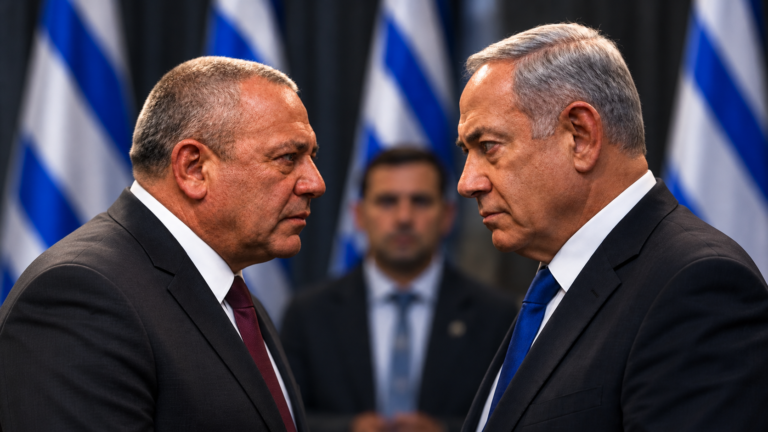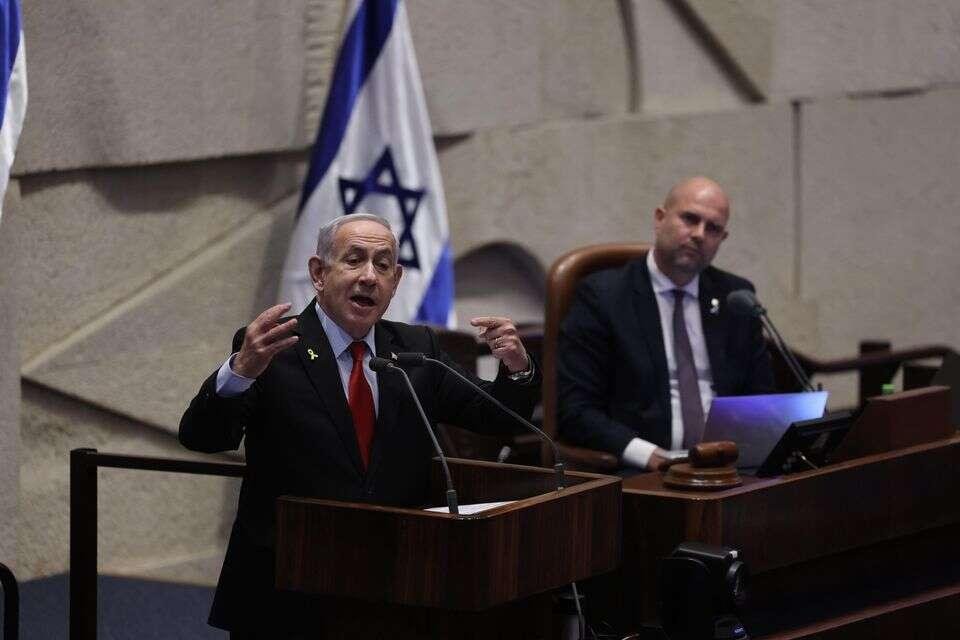
The Politics and Society Institute, within the Adnan Abu Odeh Program for the Study of the Zionist movement and Israel – The AIN Program, has issued a new study entitled “From the Founding to October 7: Measuring the Political and Strategic Impact of Benjamin Netanyahu Compared with the Ruling Elite in Israel (1948–2026).” The paper examines Netanyahu’s place among the most influential leaders in the structure of the Israeli state by comparing him with David Ben-Gurion, Menachem Begin, Yitzhak Rabin, and Yitzhak Shamir. It presents an analytical framework that distinguishes among the magnitude of political impact, its direction, and its durability, thereby enabling a move beyond the direct linkage between length of tenure in power and the scale of strategic achievement.
According to the paper, the assessment of Netanyahu’s impact differs depending on the metric used. He ranks second after Ben-Gurion in terms of cumulative impact, according to the metric that was constructed, but falls to fourth place among the five leaders when the intensity of impact is calculated relative to years in office. This result indicates that the length of his tenure contributed fundamentally to the breadth of his influence, without this meaning that he surpassed others in the ability to bring about structural transformations within a shorter period of time.
The paper explains that the specificity of Netanyahu’s experience lies in producing change through gradual accumulation, through the expansion of settlement, the consolidation of legal and institutional transformations, and the reshaping of the electoral and social map. In this context, it addresses the Nation-State Law, attempts to alter the balance among the branches of government, and transformations in the political economy, considering that the impact of these policies goes beyond individual decisions to the reshaping of the state’s structure and orientations over the long term.
By contrast, the paper distinguishes between the breadth of influence and the achievement of sustainable strategic gains, and discusses the limits of Netanyahu’s ability to translate military superiority into lasting political arrangements. It also examines his role in separating the path of Arab normalization from the settlement of the Palestinian question, and considers settlement expansion to be one of the aspects of his legacy most difficult to reverse, because of the geographical and demographic facts it imposes that deepen the constraints on any future political settlement.
The paper concludes that understanding Netanyahu’s legacy requires looking at the transformations that may persist after his departure from power, foremost among them the changes affecting mechanisms of political and institutional accountability. It gives particular attention to the issue of accountability for the failure of October 7, considering that the weakening of accountability may leave an impact that extends beyond Netanyahu himself to the operating rules of the Israeli political system, and to the relationship of the political leadership with the security and judicial institutions and with society.
To read the full paper: